
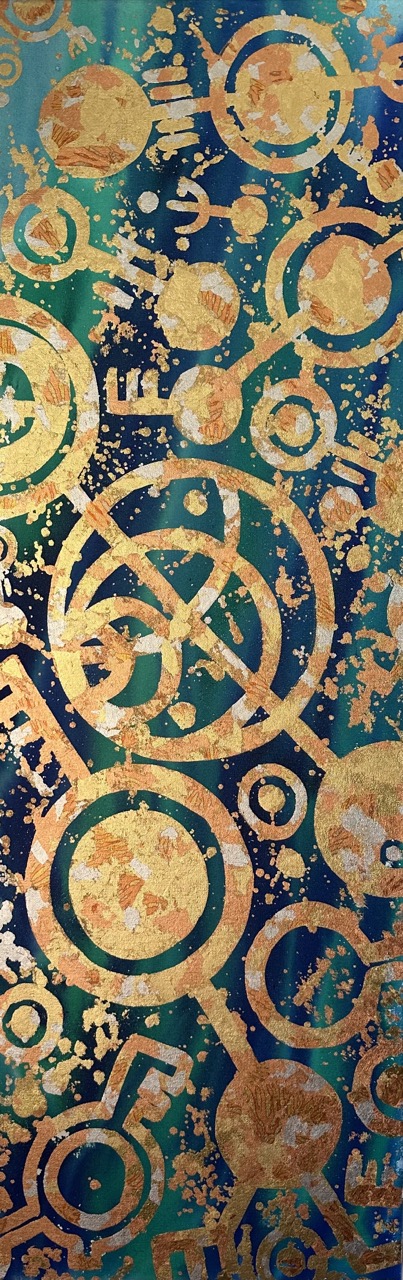
About the Arcturus Rising: Glyphs of Light
Archturus is an orange-coloured giant star 36.7 light-years from Earth. The fourth brightness star in the night sky, and the brightest star in the northern constellation Boötes. Located north of the celestial equator, it is visible from both the Northern and Southern Hemisphere and thus has been seen as a star of importance in cultures around the Earth.
Archturus is known as the ‘Bear-Keeper’ guarding Ursa Major, the ‘Keeper of the Heavens’, the ‘Guiding Star’, the ‘Star of Gladness’ Hokule’a in Hawaiian, the ‘Good Shepherd’ in the Middle East or the ‘Guiding Hand’. It is also believed to be home to the cosmic creators of the famous crop circle phenomena.
Crop circles have been captivating the imaginations of humanity since they first began getting global attention in the UK in the 1970’s. They have continued to appear in fields across the world to this day with their mesmerizing sacred geometric designs embodying a mysterious union of creativity, science, and energy.
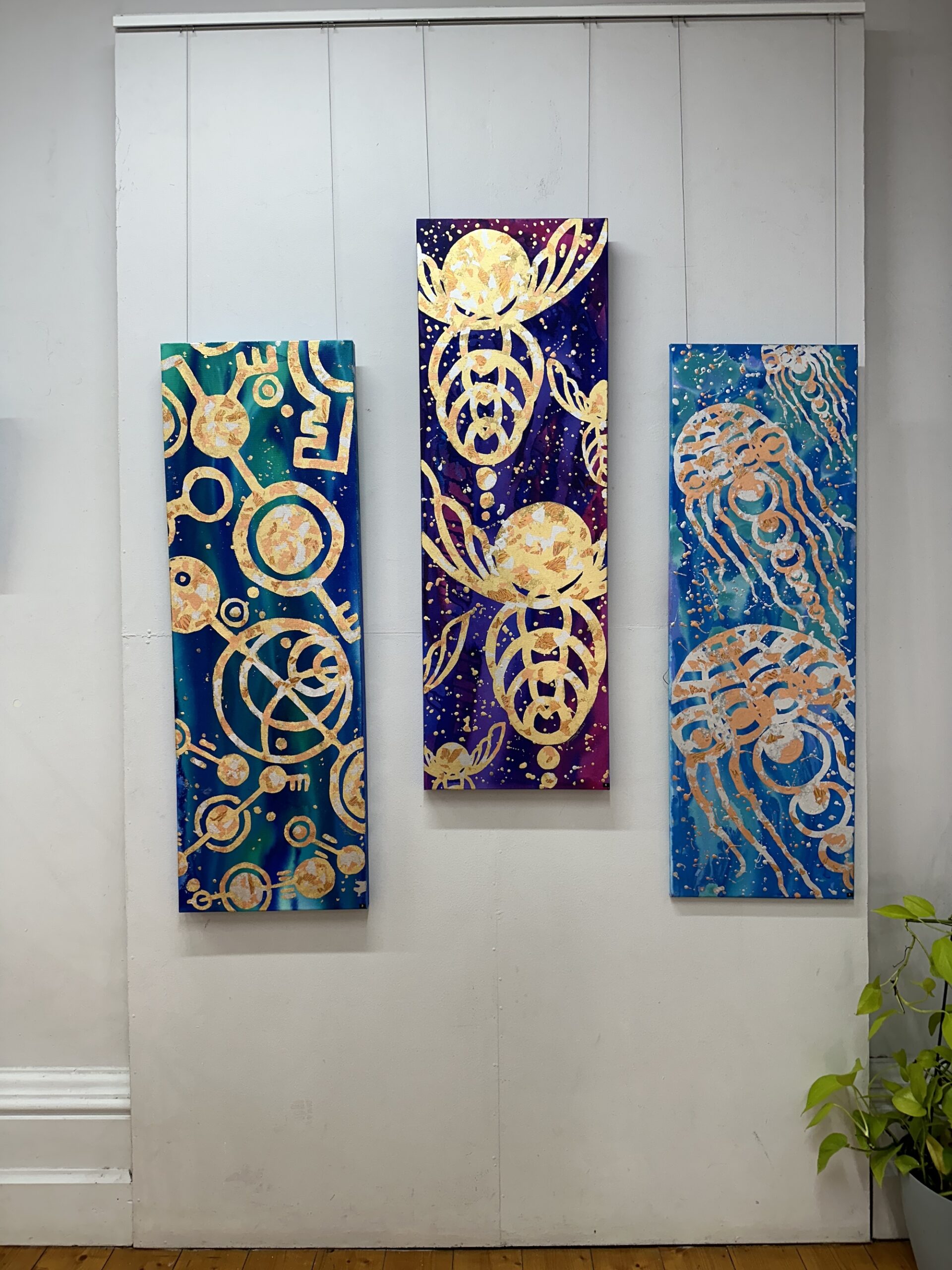
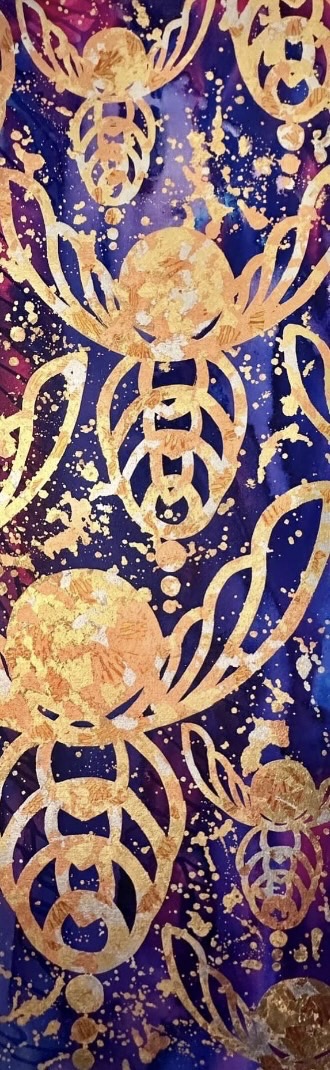
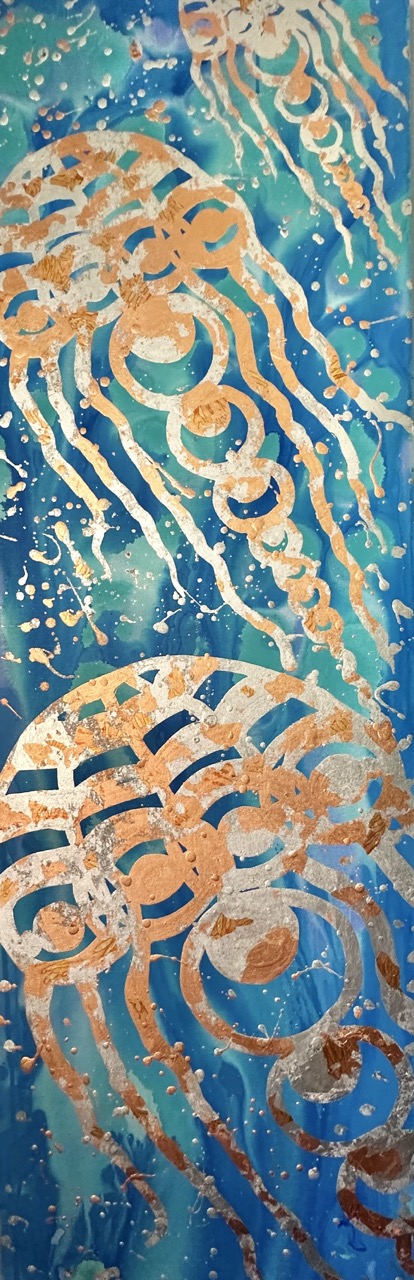
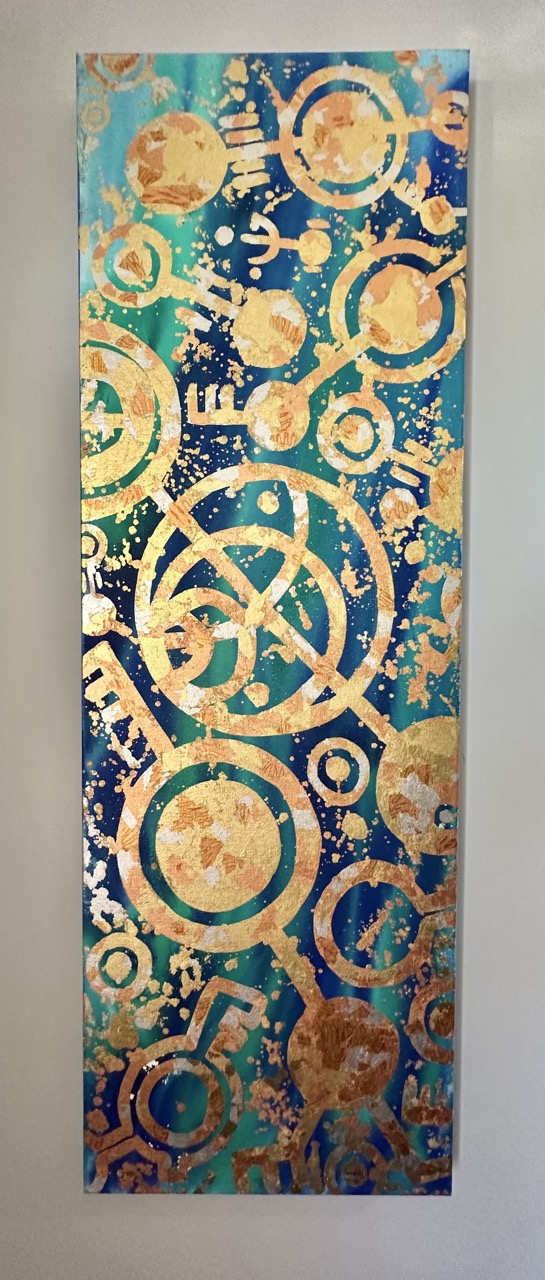
This exhibition emerges from a collaboration with Sacred Resonance, whose live planetarium visual–sound baths have brought these motifs alive as accompanied by their celestial soundscapes. Jessica Curtis hand painted many of the crop circles and Archtururs related cultural symbols which has been developed into visual animations for the Arcturus Rising planetarium show.
The physical works presented here are Jessica’s intuitive responses to the enigmatic designs of crop circles. Traditionally documented in greyscale, these formations are reimagined through her art in colour, light, and movement. They invite us to ask: What are their original messages their creators? How might we receive and learn from them today? And what happens when we open ourselves to their harmonic language, perceiving them as living glyphs of consciousness?
Crop Circles: Geometry, Mystery, and Meaning
Crop circles are large-scale patterns or designs that appear in fields of cereal crops such as wheat, barley, and corn. Created through the flattening of plants, they form intricate, often geometric formations that transform farmland into living canvases. While many crop circles are confirmed as human-made, others are associated with mysterious or unexplained origins, continuing to inspire fascination across the globe.
A Brief History
Reports of crop-circle-like phenomena extend back several centuries, with accounts arising from different parts of the world. Yet it was in the late 20th century that crop circles entered public consciousness on a global scale.
The modern era began in the 1970s, primarily in southern England — particularly Wiltshire county, a region also rich in ancient sites such as Stonehenge and Avebury. What began as relatively simple shapes soon evolved into elaborate geometric formations. By the 1980s and 1990s, crop circles reached their peak, with hundreds reported each year. Many of these works stretched hundreds of feet across, remarkable not only for their size but also for their breathtaking intricacy.
Defining Characteristics of “Real” Crop Circles
Researchers and enthusiasts often distinguish between man-made designs and what are considered “genuine” or unexplained crop circles. Certain characteristics are commonly cited:
- Geometric precision and complexity: Many feature spirals, rings, triangles, fractals, and interlocking circles that exhibit striking mathematical symmetry.
- Uniform flattening of crops: Instead of being broken, the stems are typically bent at their nodes, suggesting a phenomenon distinct from simple mechanical force.
- Layering and weaving: In some formations, the stalks are intricately interlaced, producing a level of finesse that seems beyond straightforward human effort.
These details — precision, symmetry, and delicate manipulation of crops — continue to distinguish the most intriguing formations,
Theories and Interpretations
Over the decades, numerous theories have emerged to explain crop circles, ranging from scientific to speculative, artistic to metaphysical.
- Human-made interventions: Many circles are created as pranks, performances, or deliberate land art. Simple tools such as boards, ropes, and surveying equipment have been used to replicate even complex designs.
- Natural phenomena: Some researchers suggest whirlwinds, tornadoes, or other atmospheric forces could press crops into patterned formations under specific environmental conditions.
- Plasma vortices and electromagnetic activity: Another scientific proposal is that atmospheric plasma or charged particles interact with crops, bending stalks into shapes.
- Extraterrestrial origins: One of the most popular cultural theories attributes crop circles to advanced civilizations beyond Earth, interpreting the complexity and symmetry as intentional messages or artistic expressions.
- Earth energies and ley lines: Some believe that crop circles arise from energetic currents running through the land — ancient ley lines — with the formations acting as visible imprints of hidden Earth forces.
- Spiritual or metaphysical messages: Others view them as signs from higher consciousness or interdimensional beings, carrying symbolic or esoteric meaning for humanity.
A Living Dialogue of Art and Mystery
Whether interpreted as natural anomalies, human creativity, or phenomena beyond current explanation, crop circles remain a compelling intersection of art, mystery, and landscape. They invite us to reflect on geometry, symbolism, and the human desire to seek meaning in patterns. Fleeting yet monumental, they transform fields into temporary galleries — ephemeral works that blur the boundary between the earthly and the cosmic delivering messages from the beyond.
Purchase or Commission